




Your cart is empty

A Swiss doctor gives you dosage advice for CBD
Cannabidiol, or CBD, is a cannabinoid found naturally in hemp plants. It is said to offer numerous benefits for the body and everyday well-being. As cannabidiol has no psychoactive effects, unlike tetrahydrocannabinol (THC), and is thought to help maintain a sense of balance in daily life, a wealth of scientific literature addresses the subject of hemp. Researchers are highlighting the benefits of cannabidiol consumption and are working on determining the optimal CBD dosage for individual needs.
Among the specialists, Swiss doctor Léonard Leinow, co-author of CBD: A Patient’s Guide to Medicinal Cannabis (1. See footnotes) (CBD: A Patient’s Guide to Medicinal Cannabis), answered our questions regarding the different dosage types that allow for optimal CBD consumption. Here is his advice!
Key takeaways:
- Dr Leinow recommends a personalised approach to CBD dosage.
- He distinguishes between three types of dosage: micro, standard, and macro.
- Each type of dosage targets specific needs, ranging from well-being to therapeutic purposes.
- CBD consumption should be tailored to the individual, with gradual progression and medical advice.
>>See all our CBD products in the shop<<
Different dosage types: how to use CBD correctly
CBD in Switzerland has become an essential ally for everyday wellbeing. This does not mean it can be consumed haphazardly.
During our interview, Léonard Leinow tells us that cannabidiol requires a “learning curve”. Consuming CBD is not that simple, especially if you are trying to address a specific need. Adapting one’s consumption to the dosage and one’s needs would therefore require a certain level of commitment from the user. According to Léonard Leinow, the dosage of cannabidiol influences its effect on the body. He writes that three types of dosage can be identified: microdosing, standard dosing and macrodosing (also known as a ‘therapeutic dose’).
>>To find out more about cannabidiol, check out our blog!<<
CBD microdosing
According to the doctor, cannabidiol microdosing involves taking 0.5 to 20 mg of CBD daily. This very low (‘micro’) dose does not, however, go unnoticed. It is said to have a long-term effect. According to the book by Leonard Leinow and co-author Juliana Birnbaum, microdosing may help with sleep, melancholy, nausea, post-traumatic stress, headaches and even metabolic disorders. This very low dose could therefore support general well-being.
The standard dose
The standard dose corresponds to an average dose of between 10 and 100 mg of CBD per day. According to the two researchers, this slightly higher level of cannabidiol is thought to have effects on pain, inflammation, arthritis, autism, anxiety and many other conditions. The list is long! In their book, Leonard Leinow and Juliana Birnbaum explain that ‘cannabis has been used as a painkiller in all major civilisations, from Asia to the Middle East, via Europe and America (2.) In short, the use of cannabidiol extends far beyond our civilisation and has now been endorsed by the scientific community as an ‘effective and safe analgesic (3.)’.
The macro dose
As its name suggests, the macro dose is a higher dose than the other two. This is why it has also been termed a ‘therapeutic dose’. The macro dose ranges from 50 mg to 800 mg per day. Léonard Leinow points out that this high dosage is used in particular to provide relief for people suffering from serious conditions such as cancer, epilepsy or liver disease.
Of course, whether you’re taking microdoses or macrodoses, before consuming CBD, it is strongly recommended that you seek medical advice.
Dosage and CBD
Choosing the right CBD dosage is no easy task. In their book, Juliana Birnbaum and Léonard Leinow provide a comprehensive list of factors to consider when determining the correct CBD dosage. According to them, one must consider one’s needs, physical condition, metabolism, weight, any treatments that might interact with cannabidiol (4.), and so on.
In this quest, doctors and patients must work together. In our interview, Léonard Leinow gives us some guidance on the dosage for a 25% concentrated CBD oil:
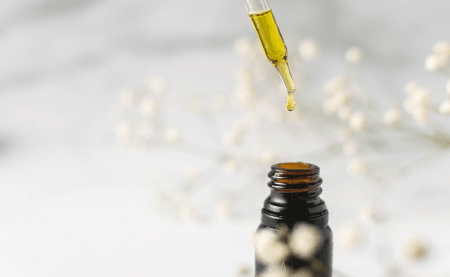
- A dose of 50 mg is achieved with just 4 drops.
- A dose of 60 mg with 5 drops.
- A dose of 80 mg of CBD is obtained with 7 drops.
- 100 mg of CBD corresponds to 8 drops.
In a 25% oil, each drop contains approximately 12 mg. If the user chooses a 15% oil, they will need to check the number of milligrams contained in a single drop and calculate their ideal dose. Generally, this information is provided directly on the packaging. In all cases, cannabidiol should be taken gradually and takes several days to take full effect.
Reviews of CBD
CBD has long suffered from negative perceptions, due to the poor reputation of THC. However, this cannabinoid is not psychoactive. It helps maintain general well-being and supports those in pain. It is therefore not surprising that the scientific community holds it in such high regard. In CBD: A Patient’s Guide to Medicinal Cannabis, Juliana Binbaum and Leonard Leinow explain the main benefits of cannabidiol:
- 1) It has virtually no side effects,
- 2) It presents a very low risk of addiction,
- And 3) There is virtually no chance of a fatal overdose.
This extremely positive view of cannabidiol can also be explained by the scientific community’s desire to move away from other substances with severe side effects. However, during our interview, Léonard Leinow qualified his remarks by pointing out that the principle of ‘Primum non nocere’ must take precedence. That is to say, ‘first, do no harm’. In this regard, he emphasised the need to consume CBD gradually and without rushing.
Author’s notes:
1. L. Leinow, J. Birnbaum, et al., CBD: A Patient’s Guide to Medicinal Cannabis -- Healing without the High, California, North Atlantic Books, 2017. [All quoted passages have been translated by the Sixty8 team]
2. Ibid., p. 259.
3. Ibid., p. 31.
4. See ibid., p. 128.











































































Leave a Reply Cancel Reply