

Your cart is empty

CBD decarboxylation: What is it?
Decarboxylation can be a bit of a headache for some consumers. But behind this technical term lies a process that is actually simple to carry out, and whose usefulness in unlocking the effects of CBD is well established. A closer look at the importance of decarboxylation and the various methods used to achieve it.
Key takeaways:
- Decarboxylation converts CBDa into CBD, which is essential for activating its beneficial effects.
- Necessary when consuming CBD in herbal tea or cooking, but not for smoking or vaping.
- Several methods exist, the simplest of which is in an oven at 110–120°C for 40–45 minutes.
- Other methods include the microwave and sous-vide, but require particular attention to temperature.
Decarboxylation: definition
Decarboxylation is a chemical process that aims to remove carbon dioxide (CO2) from an organic molecule, usually by heating it. This reaction alters the chemical structure of the molecule and, in the case of cannabinoids, allows different effects to be produced on the body.
This process is an essential step in order to benefit from the potential advantages of CBD. When CBD is smoked, decarboxylation does not need to be carried out beforehand, as this process occurs directly due to the heat released by the combustion of the flower. However, to use CBD flowers in the form of a herbal tea or to prepare dishes, it is recommended to decarboxylate them before steeping them in hot water, as we will see later in this article.
See other articles on preparing CBD.
Why decarboxylate your CBD flower?
In fact, the hemp plant is composed mainly of acids (THCa, CBGa or CBDa, for example).
To benefit from the potential effects of CBD on the body, it is therefore necessary to convert CBDa acid into CBD via decarboxylation. Following this step, the resulting cannabinoid molecule will be able to bind to two receptors in the human body’s endocannabinoid system and affect the nervous system.
However, don’t worry! Decarboxylation is actually a fairly simple process. You can even do it at home, using everyday kitchen utensils, as we’re going to discover together today.
Do you always need to decarboxylate your CBD flowers?
The answer to this question depends entirely on how you intend to use your CBD flowers. As we saw earlier, if you plan to smoke your CBD flowers, the decarboxylation process is not necessary beforehand, as the chemical reaction occurs naturally when the flowers are burned. Tofully benefit from the effects of CBD, it is actually recommended to consume CBD flowers using a vaporiser, rather than smoking them in the more traditional way. Indeed, thanks to this technique, the CBD is heated to the correct temperature, allowing you to benefit from the molecule’s effects without having to consume the harmful substances present in tobacco.
Different decarboxylation techniques
There are various methods for decarboxylating CBD flowers at home. Here are some of the most common ones.
Decarboxylating CBD in the oven
Decarboxylation in the oven is the simplest method to use. To do this, you will need:
-
- an oven;
-
- a sheet of baking paper (or an oven-safe dish);
-
- one or several CBD flowers.
Then follow this recipe:
-
- Preheat your oven to 110–120°C (90°C if your oven has a fan);
-
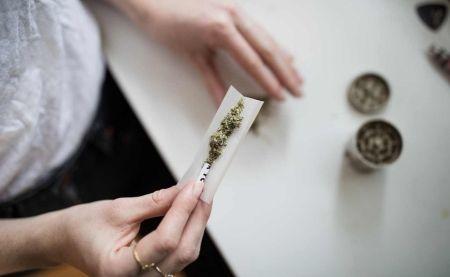
- Crush the CBD flowers using your grinder;
-
- Spread the crumbs onto baking paper and place it on a baking tray (or in a suitable dish);
-
- Place in the oven for 40 to 45 minutes, making sure to stir the crumbs from time to time;
-
- Once cooked, a pungent smell should waft from the oven. If this is not the case, cook for a little longer.
|
Warning: keep a close eye on your oven temperature, ideally using a kitchen thermometer. If the heat is too intense, it could burn your CBD flowers! |
Decarboxylating CBD in the microwave
If you don’t have an oven, you can also decarboxylate your CBD using a microwave. However, this method is not the most recommended for this process. Indeed, it can be very difficult to control the temperature of a microwave. This can increase the risk of burning the CBD flowers or failing to complete the process successfully.
Here is the method to follow to decarboxylate your CBD flowers in the microwave:
-
- Crush your CBD flowers using your grinder;
-
- Then place them in a bowl and cover it;
-
- Set your microwave to medium power and heat for 1 minute;
-
- Then check the appearance of your crumbs and repeat 3 to 4 times until you get a pungent smell and browned crumbs.
Decarboxylating CBD under vacuum
Also known as the “bain-marie method”, this technique allows you to decarboxylate your CBD by placing the flowers in a vacuum-sealed bag, then in a saucepan filled with water. This method is particularly useful as it minimises the risk of burning the plant during the process.
To use this method, you will need a saucepan, a vacuum sealer and a precision cooker.
-
- Crumble your flowers until you have medium-sized crumbs;
-
- Seal them in a heat-sealable plastic bag using a vacuum sealer;
-
- Fill your saucepan with water
-
- Place the vacuum-sealed precision cooker inside and set the temperature to 95°C;
-
- Then place the bag of crumbs in the water and leave to cook for 1 hour.
We hope you find this information on decarboxylation useful. Make good use of it!
See also: