

Your cart is empty

CBD & saliva tests: how long after consumption?
Key points:
- Distinction between CBD and THC: CBD is a non-psychoactive cannabinoid valued for its potential therapeutic benefits, whereas THC is psychoactive and strictly regulated. CBD products must comply with THC content standards to remain legal.
- Saliva tests and detection: Saliva tests are primarily designed to detect THC, not CBD. However, the presence of THC, even in small quantities, in certain CBD products can lead to positive results in these tests.
- Legal consequences and precautions: In France, driving with traces of THC detected by a saliva test can lead to severe penalties. Consumers should choose reliable, well-tested CBD products to avoid legal complications, especially before driving.
- Self-testing and proactive management: The use of saliva self-test kits allows consumers to check for the presence of THC before undergoing an official test, offering a proactive method to manage the risk of positive results and encourage responsible consumption.
With the growing popularity of cannabidiol (CBD) in the fields of wellness and alternative health, many consumers are wondering about the legal and practical implications of its use, particularly with regard to drug testing. CBD, although non-psychoactive unlike its cousin THC, can raise concerns when it comes to saliva tests used by the authorities or in a workplace setting.
This concern is exacerbated by the legal nuances and varying regulatory frameworks governing the use of CBD. Consumers wish to understand not only whether CBD can influence the results of a saliva test, but also for how long after consumption they might be likely to test positive, despite the absence of cognition-altering effects.
The aim of this article is to provide clear and accurate information on the detection of CBD in saliva tests, exploring the regulatory aspects, consumer expectations and practical implications of these tests. We will also discuss the latest legislative developments in France and their impact on CBD consumers.
CBD under the microscope: clarifications for concerned users
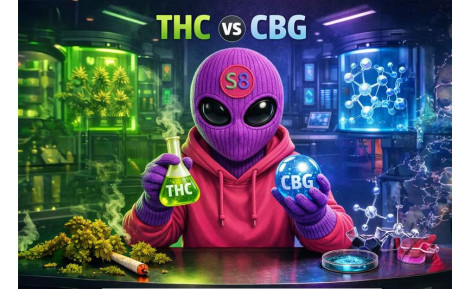
Distinguishing between cannabidiol (CBD) and tetrahydrocannabinol (THC) is crucial for understanding the legal implications and the results of saliva tests. CBD and THC are both cannabinoids found in the cannabis plant, but they differ greatly in terms of their effects and legal treatment.
- Compounds and effects:
- THC is the main psychoactive component of cannabis, responsible for mind-altering effects such as euphoria and altered sensory perception.
- CBD, on the other hand, does not produce psychoactive effects. It is often valued for its potential therapeutic benefits, including the reduction of anxiety, stress and pain without causing a ‘high’.
- Legislation:
- In France, THC is strictly regulated, with virtually zero tolerance in commercially available products. Any product containing more than 0.2% THC is considered illegal.
- CBD, on the other hand, is legal under certain conditions, notably that derivative products do not contain THC above the authorised threshold and are extracted from approved hemp varieties.
- Products on the market:
- CBD-based products include oils, creams, capsules and e-liquids for e-cigarettes, all marketed with various claims of health benefits.
- Their legal status is generally assured provided that THC content standards are met and the products are correctly labelled and marketed without unauthorised medical claims.
- Summary of legislative developments:
-
- French legislation has recently evolved to clarify the status of CBD, affirming its legality under the aforementioned conditions and thereby facilitating its access and marketing.
- These distinctions are essential not only for consumers who must navigate the complex landscape of CBD whilst complying with the law, but also for understanding how these substances can be detected and differentiated in saliva tests.
The subtleties of CBD’s effects
CBD interacts with the human body in complex ways, primarily via the endocannabinoid system, which plays a crucial role in regulating various physiological functions. This interaction may offer several potential therapeutic benefits, although research is still ongoing to fully understand them.
- Interactions with the body:
- CBD works by influencing various receptors in the body, including the CB1 and CB2 cannabinoid receptors, as well as other non-cannabinoid receptors, which may contribute to its anti-inflammatory, anxiolytic and analgesic effects.
- It is important to note that CBD does not bind directly to these receptors like THC, but rather modifies the receptors’ ability to receive chemical signals, which may explain its lack of psychoactive effects.
- Therapeutic benefits:
- Scientific studies have explored the role of CBD in the treatment of various conditions, such as anxiety disorders, chronic pain, and certain types of epilepsy. However, it is crucial to consult healthcare professionals before using CBD for medical purposes.
- Societal perception:
- Despite its potential benefits, the perception of CBD can be marred by confusion with other forms of cannabis. This can influence how consumers are viewed by society, particularly regarding driving and use in professional settings.
- Drivers using CBD may be concerned about the implications of a positive saliva test, although CBD itself is not believed to impair cognitive or motor skills.
This understanding of CBD’s effects and interactions with the human body is essential to demystify its use and to educate the public on what consuming CBD means in terms of wellbeing and legality.
Saliva tests in practice: a guide
Saliva tests have become a common tool for detecting the presence of substances such as THC during roadside or workplace checks. It is essential to understand how these tests work and their specific application regarding CBD.
- What is a saliva test?
A saliva test is a rapid screening method that analyses saliva to detect the presence of drugs or their metabolites. It is often used by the police on the roads or by employers as part of workplace substance control policies.
- Use by law enforcement
In France, saliva tests are commonly used by the police to quickly check, on the spot, whether drivers have recently consumed psychoactive substances. Their use is regulated by law, and they are recognised for their ability to provide rapid results.
- Technical detection process
Saliva tests detect the presence of THC, the psychoactive compound in cannabis, rather than CBD. However, due to the possible presence of traces of THC in certain CBD-based products, there is a risk of a positive result, particularly if the product consumed contains THC levels above the legal limit.
- Case studies
Practical cases show that saliva tests can be triggered by the presence of THC rather than CBD. For example, a driver who is legally consuming CBD but using a product that is mislabelled or contaminated with THC could face legal consequences if the saliva test detects THC.
The accuracy of saliva tests regarding CBD
The issue of the accuracy of saliva tests when it comes to specifically detecting CBD is complex, mainly because these tests are designed to identify THC and not CBD. However, the presence of THC, even in small quantities, in certain CBD products can lead to positive test results.
- Assessment of reliability
Saliva tests are highly effective at detecting THC, with a relatively short detection window following consumption. However, their specificity for CBD is limited, meaning they are not designed to measure or detect CBD alone.
False positives may occur, particularly if consumers use CBD products containing traces of THC exceeding legal thresholds.
- Comparison with other screening methods
Compared to blood or urine tests, saliva tests offer a shorter detection window, which is ideal for identifying recent consumption rather than long-term use.
Urine and blood tests can detect cannabinoids for a longer period after consumption, but they are less convenient and more invasive than saliva tests.
- The influence of time on CBD detection
Although CBD itself is not detected in standard saliva tests, the length of time THC can remain detectable in saliva may vary depending on several factors, such as frequency of use, the individual’s metabolism and the concentration of THC in the product consumed.
This analysis reveals that, whilst saliva tests are a useful tool for detecting THC, they have significant limitations when it comes to CBD specifically. It is essential for CBD consumers to be aware of these nuances to avoid unexpected legal complications.
Detection window and consumption: what are the variables?
Understanding how different factors influence the length of time for which CBD and THC can be detected in saliva is crucial for consumers. The length of time for which THC can remain detectable after consumption depends heavily on the frequency and dosage of consumption, as well as the method of ingesting the CBD product.
The frequency with which a person consumes products containing THC plays a major role. Regular users may have detectable traces of THC in their saliva long after consumption, compared to those who use it occasionally, in whom the traces generally disappear more quickly. Similarly, the amount of THC in the product consumed directly affects how long it can be detected; products with a higher concentration of THC will prolong the detection period.
The method of consumption is also a key factor. For example, smoking or vaping cannabis introduces THC into the system more quickly and may also accelerate its elimination compared to methods such as ingesting oils or edibles, where THC may remain in the saliva for longer due to slower absorption and metabolism.
Finally, individual variables such as a person’s metabolism and general state of health also influence the rate at which THC is metabolised and eliminated from the body. These factors make each case unique in terms of the THC detection window following the consumption of CBD products.
This information is vital for consumers, who need to be aware of the potential risks of testing positive for THC, even when using products that are primarily CBD-based, particularly in a legal or professional context.
>>Discover our THC saliva tests<<
Risks and responsibilities: driving after consuming CBD
Driving after consuming CBD raises important questions regarding road safety and legal responsibilities. Although CBD is not psychoactive and does not appear to directly impair driving ability, the presence of traces of THC in certain CBD products could have serious legal implications for drivers.
In France, the law is strict regarding driving under the influence of psychoactive substances. Law enforcement officers use saliva tests to quickly detect the presence of THC. A positive result can therefore have significant legal consequences, even if the driver has only consumed CBD but the product contained THC levels above the legal limit.
Real-life case studies show that CBD users, who believed they were using a product that posed no risk to driving, have faced penalties for driving under the influence after tests revealed the presence of THC. These situations highlight the importance of choosing CBD products carefully, by checking their exact composition and ensuring they comply with regulatory standards.
These issues are not limited to legality; they also concern safety. Although CBD itself does not impair driving ability, the unintentional presence of THC can potentially affect a driver’s performance and, consequently, pose a risk to public safety.
Faced with these challenges, CBD consumers are advised to exercise extreme caution, choose reliable products and make informed decisions, especially when planning to drive.
What does the law say?
The legal framework governing CBD consumption and driving in France is particularly strict, highlighting the need for CBD consumers to be well-informed about their rights and obligations.
French law prohibits driving under the influence of psychoactive substances, which includes THC but not explicitly CBD, as the latter is not considered psychoactive. However, the main issue for CBD users is the potential contamination of products with THC, even in small quantities, which could result in a positive saliva test. The presence of THC in a driver’s system is sufficient to be considered a breach of safe driving regulations.
In the event of a positive saliva test, the consequences can be severe, including fines, loss of driving licence points, and even prison sentences in serious cases. The law makes no distinction between intentional consumption of THC and accidental contamination from CBD products.
It is therefore essential that consumers choose their CBD products carefully, favouring those that are tested and certified to ensure they do not contain THC above legal limits. Furthermore, being aware of current regulations and legislative changes is crucial to avoiding legal trouble.
This section clearly shows that, although CBD itself is legal and generally safe under certain conditions, the legal implications of its consumption can be complex and serious, particularly with regard to driving.
Prevention first: sound advice for consumers
For CBD users who want to avoid complications during a breath test, being well-prepared and informed is essential. Here are some practical tips to minimise risks and navigate the regulatory framework effectively.
- Know the detection window: It is important to understand how long THC, even in trace amounts, can remain in your system. This depends on the frequency of use, the type of product, and your metabolism. Knowing this can help you plan your consumption before driving or entering a workplace where tests might be carried out.
- Choose certified CBD products: Opt for CBD products that have undergone rigorous laboratory testing to ensure they do not contain THC above legal limits. Check the labels for certifications and laboratory reports that attest to their composition.
- Self-testing methods: Purchasing saliva self-test kits can be a good way to check whether you are likely to fail a saliva test after consuming CBD. This can give you peace of mind before driving or reporting to a workplace.
- Test quality assurance: Investing in quality products and reliable tests not only helps you comply with the law, but also keeps you and others safe. Ensure the tests you use meet industry standards.
- Planning your consumption: If you know you need to drive, it may be prudent to limit or avoid consuming CBD that could contain traces of THC. Plan your consumption around your activities to avoid any risk of complications.
By following these tips, CBD users can better prepare for a saliva test and avoid unexpected legal consequences. This also reinforces the need for an informed and cautious approach to CBD consumption, particularly in relation to driving and road safety laws.
Self-testing: a tool for empowerment
Self-testing can play a crucial role for CBD users who want to be certain of their status before undergoing an official saliva test. Saliva self-test kits are available on the market, allowing individuals to test for the presence of THC at home. These tests can help identify the presence of traces of THC resulting from the consumption of CBD products and enable informed decisions regarding driving or compliance with employment policies.
Although not foolproof, these kits are a useful means of proactively managing the risk of a positive test result. They reinforce the importance of autonomy and individual responsibility in managing CBD consumption, particularly within a strict legal framework.
Conclusion
In summary, CBD consumption and saliva testing are intertwined issues within a complex legal and societal framework. For CBD users, it is crucial to have a solid understanding of the laws in force, the THC detection window and best practices for CBD use. Adopting an informed and cautious approach can help avoid legal complications and promote responsible use in relation to driving and road safety laws.