

Your cart is empty
HHC: What is it?
Cannabis is composed of several different molecules, some of which are better known than others to consumers and the scientific community. This is particularly true of CBD and THC, whose properties are increasingly being studied in order to better understand their impact on the body.
Nevertheless, certain molecules, such as HHC, remain fairly mysterious and are little studied by scientists. However, this substance is said to have characteristics similar to THC, whilst remaining illegal in France…
Key takeaways:
- HHC, a synthetic cannabis compound, currently illegal, and mysterious compared to CBD and THC.
- Synthesised in the laboratory, HHC shares a similar structure to THC but with key differences.
- HHC produces relaxing and euphoric effects, acting on the same receptors as THC.
- The effects and safety of HHC have not yet been fully studied.
Everything you need to know about HHC
HHC, also known as hexahydrocannabinol, is a natural cannabis compound, but is present in minute quantities within the plant (in its seeds and the pollen of male plants). Just like CBD or THC, it forms an integral part of the cannabinoid family.
Good to know: although the existence of HHC and HHCP has been known for many years, it is a synthetic molecule that has not yet been studied in depth by scientists.
The HHC manufacturing process
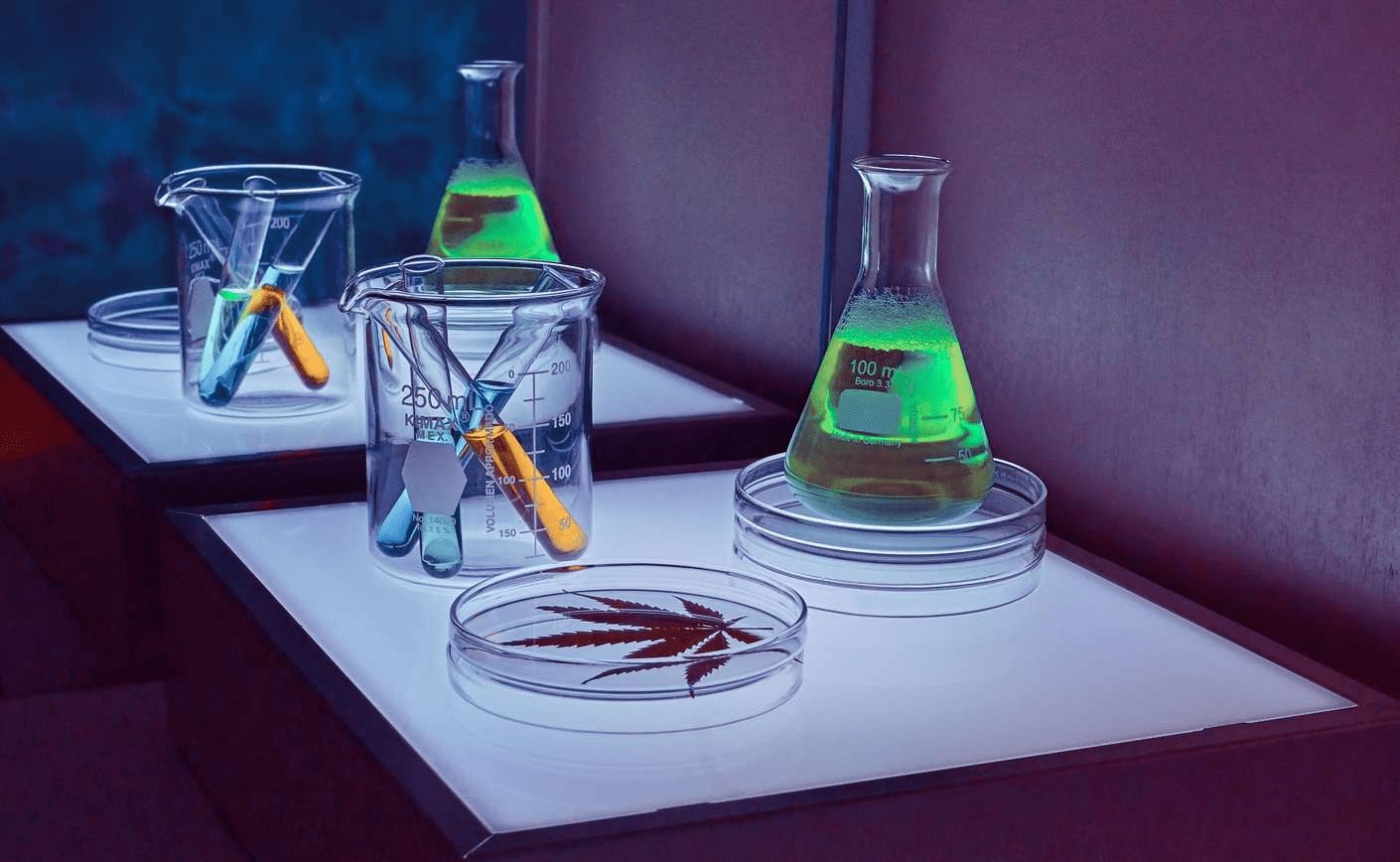
Becauseit represents only a very small fraction of the molecules that make upthe hemp plant, the HHC we know today is not extracted from cannabis, but rather synthesised in a laboratory.
It was first synthesised in 1944 by an American chemist named Roger Adams, through the hydrogenation of a synthetic THC molecule: delta-9-THC. HHC therefore has essentially the same molecular structure as THC, but differs, amongst other things, by the addition of two carbon atoms.
Warning: the conversion of THC into HHC can only be carried out in a laboratory, particularly due to the risk of explosion involved.
What is the difference between CBD and HHC?
The main difference between CBD and HHC lies in its natural concentration in cannabis. Indeed, CBD is a molecule present in sufficient quantities within a hemp plant, which allows it to be extracted to make products such as sublingual oil, for example or to be used as it is in products such as flowers. As we have seen previously, HHC is present in too small a quantity and needs to be synthesised in a laboratory.
CBD is not considered a psychotropic molecule, and for the time being neither is HHC. Indeed, this molecule, which is still relatively new on the market, has not yet been classified as psychotropic or otherwise by the government.
Good to know: the consumption of HHC in France is illegal. We nevertheless recommend that you take the utmost precautions if you decide to consume this type of product. Furthermore, there are few, if any, scientific studies capable of confirming the benefits or dangers of this molecule on the body. This is why we strongly recommend that you only consume this type of product on an occasional basis and always consult your doctor for advice.
What is the difference between HHC and THC?
Whilst both molecules derived from the cannabis plant share similarities, they also have significant differences that are worth noting.
Just like CBD and THC, HHC is part of the cannabinoid family. This means that the molecule is naturally present in cannabis plants. However, unlike CBD and THC, which are present in sufficient quantities to be utilised directly at harvest, HHC is present in too small a quantity to have any effect on the user. It is therefore necessary to synthesise it in order to add it to products and achieve a noticeable effect.
HHC produces effects that lie halfway between those of THC and CBD. It induces intense physical relaxation and mild mental stimulation. However, no serious scientific study has yet examined these effects in detail.
What are the effects of HHC?
Due to its similarity to THC, HHC is thought to act on the same receptors in the body and produce fairly similar effects. These include, in particular:
-
a sense of well-being;
-
a change in mood ;
-
a fleeting euphoria ;
-
a sensation of muscle relaxation ;
-
a altered perception of time.
It should be noted that the effects of HHC observed can last between 1 and 2 hours before wearing off. THC, on the other hand, lasts much longer, with effects lasting up to 12 hours.
Is HHC dangerous to health?
To date, no incidents linked to the consumption of HHC have been identified. However, it is important to bear in mind that the effects of this molecule on the body have not yet been clearly identified and confirmed by scientific studies. There is therefore no certainty regarding the short-, medium- or long-term effects of HHC on consumers’ health.
We hope that this information will help you better understand what HHC is and what its effects are on the body!