

Your cart is empty

Can CBD really help you quit THC?
Although these two molecules both originate from cannabis, one has addictive and psychotropic effects on the body whilst the other may potentially help to relieve certain ailments. Focus on the benefits of CBD for relieving certain symptoms associated with cannabis withdrawal.
Key takeaways:
- CBD and THC are derived from cannabis but have opposite effects; CBD can help relieve THC withdrawal symptoms.
- CBD is not psychoactive, is not addictive and can reduce anxiety and stress associated with withdrawal.
- Studies suggest that CBD has anti-addictive effects and can help regulate the adverse symptoms of THC.
- For withdrawal, CBD oil is recommended for its adjustable dosage and almost instant effects.
>>Browse our CBD products in the shop<<
We would like to remind you that cannabis addiction is a serious issue and the information/advice provided on this page should not be considered medical advice. If you wish to stop using THC, Sixty8 advises you first and foremost to consult your doctor for personalised help and support.
What is the difference between CBD and THC?
THC (tetrahydrocannabinol) is a psychoactive, addictive molecule that alters the state of consciousness of the person consuming it. It is classified as an illicit substance in France and poses risks to the mental and physical health of the person consuming it.
CBD (cannabidiol) is another molecule found in cannabis. Its effect on the body is quite different from that of THC, for various reasons. Indeed, CBD is not a so-called “psychoactive” compound: its consumption therefore does not lead to any dependence and is therefore not considered equivalent to the consumption of narcotics.
The benefits of CBD in the context of cannabis withdrawal
CBD is said to possess several beneficial properties for the body, but studies are still ongoing to enable scientists to assess more concretely the effects of this molecule on overall health.
However, a scientific study conducted by researchers Mélissa Prud’homme, Romulus Cata and Didier Jutras-Aswad tends to demonstrate the anti-addictive and beneficial effects of CBD in the treatment of cannabis withdrawal symptoms, induced by a dependence on THC.
According to a scientific study conducted by researchers C. H. Ashton, P. B. Moore, P. Gallagher and A. H. Young, CBD may also help regulate the harmful effects of THC on the body and reduce episodes of paranoia potentially caused by withdrawal.
The cannabidiol molecule is also thought to be capable ofalleviating certain symptoms associated with cannabis withdrawal, notablystress and anxiety, as demonstrated bya scientific study from 2015, conducted at the University of Montreal Hospital Centre (CHUM).
Another scientific study conducted by researchers Wei Xiong 1, Tanxing Cui, Kejun Cheng, Fei Yang, Shao-Rui Chen, Dan Willenbring, Yun Guan, Hui-Lin Pan, Ke Ren, Yan Xu and Li Zhang also highlights the potential anti-inflammatory properties of CBD. In the context of cannabis withdrawal, this molecule could therefore help to relieve certain abdominal pains that may sometimes occur in patients.
Which CBD for cannabis withdrawal?
If you wish to use CBD to help you overcome your THC withdrawal, we recommend using e-liquids for vaping, oils or food products, particularly if you also wish to stop smoking, for example.
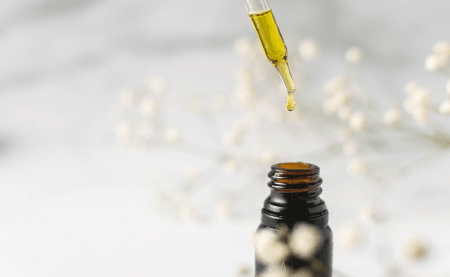
CBD oil can prove to be an attractive alternative to help you on your withdrawal journey, particularly because you can adjust the dosage according to your needs. Taking the oil also allows you to feel the effects of CBD almost instantly.
|
Did you know? CBD flowers can also be smoked. If you don’t want to stop smoking, this method can help you gradually replace your THC consumption routine with a CBD-based routine. Sixty8 still recommends using a vaporiser to consume your CBD. This prevents the product from being burnt and limits the harmful effects of smoke. |
THC addiction is considered a difficult withdrawal to overcome. Do not hesitate to seek outside help. Contact Ecoute Cannabis on 0 980 980 940 (available 7 days a week from 8 am to 2 am).
See also: