




Your cart is empty

CBD and THC: Characteristics, effects and legislation
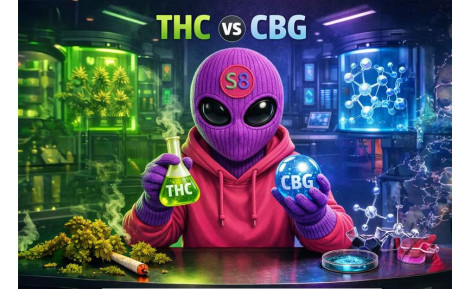
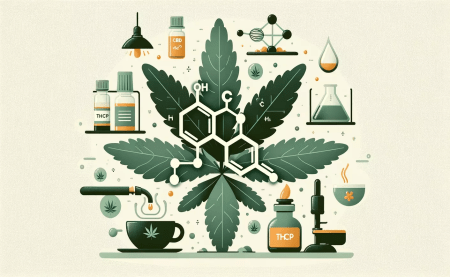
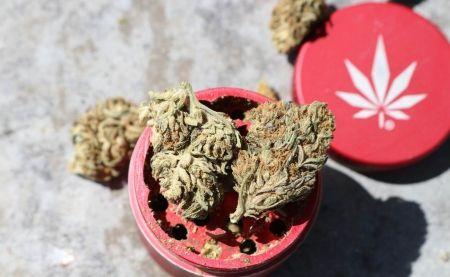
Tetrahydrocannabinol (THC) is the best-known molecule in cannabis. This cannabinoid, naturally produced by cannabis flowers, has unfortunately shaped the plant’s reputation. Its interaction with the endocannabinoid system causes psychoactive effects and can lead to side effects that are harmful to health. Cannabidiol (CBD) is a molecule similar to THC, but with a different molecular structure. This cannabinoid, produced naturally by the hemp plant, acts on the endocannabinoid system without causing psychoactive effects. Other cannabinoids such as cannabigerol (CBG), cannabinol (CBN), cannabichromene (CNG) are produced by hemp. There are over 100 cannabinoids found in natural cannabis.
Key points:
- THC is psychoactive and can lead to addiction and harmful side effects.
- Unlike THC, CBD has no psychoactive effects and is not addictive.
- THC is illegal in France, whereas CBD is permitted provided it contains less than 0.2% THC.
- CBD offers wellness benefits without the risks associated with THC.
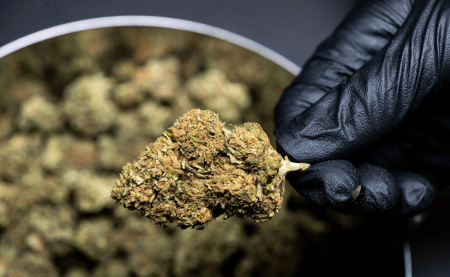
>>Order your CBD flowers now<<
Although THC and CBD both come from the same plant, they are completely different in terms of their effects on the body. Whilst tetrahydrocannabinol is classified as a narcotic, cannabidiol, on the other hand, was legalised a few years ago due to its beneficial properties.
Why choose CBD? We explain everything!
What is the difference between CBD and THC?
Different effects: CBD vs THC
As we mentioned, CBD and THC are both cannabinoids derived from the natural hemp plant. However, they have nothing in common in terms of their effects. The difference in structure between the two molecules affects their impact on the body, making one psychoactive (THC) and the other non-psychoactive (CBD).
Cannabidiol is not addictive. According to numerous recent studies, it is said to have analgesic, anti-inflammatory, anxiolytic and anti-stress effects, amongst others, but is reported to have virtually no side effects. In his article ‘Phytocannabinoids: updating our view of Cannabis Sativa L?’, toxicologist Nicolas Donzé states that side effects are rare and mild (occasionally, one may experience fatigue, a slight rise in temperature or digestive problems). He also notes that CBD causes little or no dependence (1).
CBD is not psychoactive. It therefore has no psychotropic effects.
Tetrahydrocannabinol, unlike CBD, leads to physical and psychological side effects. In particular, it can alter the senses, cause anxiety, disorientation, lead to psychotic episodes, impair cognitive development and cloud emotions and thoughts (2).
THC is psychoactive. It can also be addictive.
A legal distinction
It is because of its harmful and addictive effects that THC has been classified as a narcotic under the law. Cannabis with a high THC content is therefore illegal. It is prohibited to consume, buy or sell it in France.
Cannabidiol, on the other hand, is authorised as it is not psychoactive and has properties that promote general well-being. A recent decree has definitively authorised its use in France. Cannabidiol products are prohibited from exceeding a THC content of more than 0.2%, to avoid any psychoactive effects. Any CBD product that does not comply with this limit is illegal!
In summary, the differences between CBD and THC lie in their impact on the body. One is psychoactive, the other is not. One is addictive, the other is not. Finally, one is illegal, the other is legal!
Why use CBD rather than THC?
Using CBD, apart from the fact that it is legal, unlike THC-containing cannabis, is also a safer way to enjoy the benefits of hemp for general well-being.
Beneficial effects
According to numerous ongoing scientific studies, cannabidiol is believed to possess properties that are beneficial to the body. As it has no psychoactive effects, it helps to relieve physical discomfort on a daily basis whilst allowing you to remain clear-headed. This natural substance is thought to reduce pain, improve sleep, reduce anxiety, and have anti-inflammatory effects. It also has the advantage of being derived from a natural source.
Finally, and most importantly, cannabidiol is not addictive. Unlike THC, which can lead to numerous symptoms of withdrawal syndrome when stopped, CBD is not ‘addictive’.
Cannabidiol is not a medicine and does not replace medical treatment. You should always seek the advice of a healthcare professional.
A legal product
Cannabidiol is legal! So choose this legal solution rather than a narcotic substance that could cause you considerable harm (in terms of health, social issues, legal consequences, etc.). Healthcare professionals are here to help you. The Cannabis Ecoute helpline: 0 980 980 940
A safe product
As CBD is a legal product, you can find out about its origin, its cannabinoid concentration and its purity. This allows you to use it more safely. A safe and reliable CBD website will always be better than a dubious source.
Non-psychoactive and non-addictive
Cannabidiol is not psychoactive. It allows you to go about your daily activities without affecting your mental clarity. It is not addictive! Choose legal cannabis… it’s worth it!
(1) See Nicolas Donzé, ‘Phytocannabinoids: updating our view of Cannabis Sativa L?’, The Valais Hospital blog. [https://blog.hopitalvs.ch/wp-content/uploads/2018/06/2021_Cannabidiol_Review_avecpostscrptum.pdf]
(2) See Karila, Laurent, et al. “Cannabis: addiction. Acute and chronic consequences”, Pratiques en santé mentale, vol. 63, no. 2, 2017. [https://www.cairn.info/revue-pratique-en-sante-mentale-2017-2-page-15.htm]






































































Leave a Reply Cancel Reply