

Your cart is empty

THCV: the new cannabinoid with surprising effects
In the vast world of cannabinoids, THC and CBD have long captured the attention of the public and researchers alike for their potential health effects and benefits. However, another cannabinoid is beginning to stand out from the crowd, attracting interest for its unique properties and potential therapeutic applications: tetrahydrocannabivarin (THCV). Less well-known than its more famous cousins, THCV stands out with a profile that could revolutionise our understanding and use of cannabis compounds. With research suggesting varied effects ranging from appetite suppression to blood sugar regulation, THCV’s potential to contribute to wellbeing deserves in-depth exploration. This article aims to unveil the many facets of THCV, examining its science, its benefits for well-being, its legal status and its future prospects, to provide an informed overview of this promising cannabinoid.
1. Understanding THCV
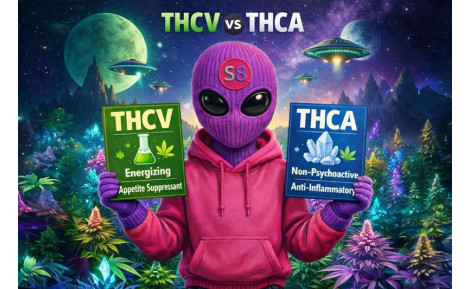
Tetrahydrocannabivarin (THCV) is a cannabinoid which, although structurally similar to tetrahydrocannabinol (THC), the main psychoactive compound in cannabis, has potentially very different effects and applications. This section aims to demystify THCV by exploring its nature, how it works and its presence in cannabis, laying the foundations for a deeper understanding of its benefits. Indeed, tetrahydrocannabivarin is non-psychoactive and may offer numerous benefits for well-being!
Scientific description of THCV
THCV is a cannabinoid naturally present in certain cannabis strains. Its molecular structure is similar to that of THC, but with variations that result in distinct effects on the human body. Unlike THC, whose psychoactive effects are well known, THCV is non-psychoactive and can act as a CB1 receptor antagonist at low doses, meaning it can potentially block some of the effects of THC. At higher doses, it can act as an agonist of these same receptors, although the effects are generally less pronounced than those of THC.
Mechanism of action
The endocannabinoid system (ECS) plays a crucial role in regulating numerous bodily functions, including mood, appetite, pain and memory. THCV interacts with this system in a unique way. It binds to the CB1 and CB2 cannabinoid receptors, but its effects vary depending on the dose.
THCV-rich cannabis strains and extraction methods
THCV is more abundant in certain cannabis strains, often those originating from Africa. However, with growing interest in its potential benefits, the cultivation of THCV-rich strains has expanded. THCV extraction methods are similar to those used for other cannabinoids, including supercritical CO2 extraction, which allows the compound to be isolated purely and efficiently, without toxic residues.
Understanding THCV and its mechanism of action is fundamental to fully appreciating subsequent discussions on its benefits for wellbeing. By clearly distinguishing itself from THC, THCV opens the door to new therapeutic applications of cannabis, promising significant advances in the field of wellbeing.
2. The potential benefits of THCV for wellbeing
Having explored the nature and mechanism of action of THCV, it is essential to examine the practical implications of these interactions for human health. Research on THCV has highlighted several areas where this cannabinoid could offer significant benefits, particularly in weight management, diabetes control, and as a neuroprotective agent.
Weight loss and appetite management
Unlike THC, which is known to stimulate appetite, THCV has demonstrated appetite-suppressing properties in various studies. This characteristic makes THCV a promising candidate for those seeking to lose weight or manage eating disorders. By acting on the CB1 receptors of the endocannabinoid system, THCV can reduce the urge to eat, which helps control calorie intake and may contribute to weight loss.
Diabetes management
THCV has also demonstrated potential in regulating blood sugar levels, which could be a boon for people with type 2 diabetes. Preliminary research suggests that THCV may improve insulin sensitivity and reduce blood glucose levels. These effects, combined with its ability to influence body weight, position THCV as a potential adjunct in the treatment of diabetes and the prevention of complications associated with the condition.
Neuroprotection and mental health
The neuroprotective potential of THCV opens up interesting prospects for the treatment of neurodegenerative diseases such as Parkinson’s disease and epilepsy. Studies have shown that THCV can exert protective effects on neurons, thereby reducing damage and improving the symptoms of these diseases. Furthermore, thanks to its interactions with the endocannabinoid system, THCV could help manage anxiety without causing the side effects sometimes associated with THC, such as paranoia or increased anxiety.
These areas of research highlight THCV’s potential to make a significant contribution to well-being. Although studies are still at an early stage and further research is needed to confirm these benefits, the current results are promising. They suggest that THCV could play a key role in the development of new therapeutic strategies for a variety of conditions.
3. Legality, availability and future prospects
Having explored the unique properties of THCV and its potential benefits for well-being, it is crucial to consider the legal and regulatory framework surrounding this cannabinoid, as well as the future prospects for its therapeutic use and market availability.
Legal status of THCV
The legal status of THCV varies considerably from country to country, often reflecting the legislation in place for cannabis and cannabinoids in general. In some jurisdictions, THCV is legal when extracted from hemp plants with THC concentrations below a certain threshold, typically 0.2% or 0.3%. However, in other regions, laws do not distinguish between different cannabinoids, placing THCV in a legal grey area or subject to the same restrictions as THC. It is essential for consumers to familiarise themselves with local regulations before purchasing or recommending THCV-based products.
How and where can THCV-based products be obtained?
With the rise in interest in THCV, the availability of products enriched with this cannabinoid has improved. These products can be found in cannabis dispensaries, specialist CBD shops, and on various websites. However, the quality and concentration of THCV can vary significantly from one product to another. It is therefore recommended to seek out reputable suppliers who provide comprehensive laboratory analyses for their products, thereby ensuring their safety and efficacy.
Future prospects
The growing interest in THCV and its potential therapeutic benefits is driving the expansion of research in this field. Future studies will need not only to confirm the positive effects observed in preliminary research but also to explore in detail the mechanisms of action of THCV, its long-term effects, and its potential for interactions with other medications. Furthermore, clearer regulations and specific guidelines for the production, distribution, and use of THCV would help to maximise its benefits whilst minimising risks to consumers.
Conclusion
THCV is emerging as a cannabinoid with significant potential for wellbeing, offering an alternative or complement to existing therapeutic options. As research continues to unveil its many facets, the need for appropriate regulation and increased awareness becomes evident. Navigating between regulatory challenges and therapeutic promises, the future of THCV looks promising, potentially marking the beginning of a new era in the approach to cannabis for medical purposes.
See also
THCV: A new horizon in weight management?