

Your cart is empty

THCV effects: how does it differ from CBD?
CBG9, THCP, THCJD, H4CBD, HHCP and HHCPO are now banned in France. Discover CBD as an alternative!
At the heart of the vast cannabis galaxy, two stars shine with a special brilliance, capturing the attention of wellness explorers and pioneers of modern medicine. These stars of hemp? THCV (tetrahydrocannabivarin) and CBD (cannabidiol), two cannabinoids which, although born of the same plant constellation, dance to distinct rhythms, each offering a symphony of unique benefits and effects. Whilst CBD has long been celebrated for its soothing properties, a new rising star, THCV, is beginning to twinkle in the firmament of scientific research, promising fascinating new prospects.
In this article, we embark on a journey to discover these two extraordinary compounds. Our mission? To explore the uncharted territories of THCV, unravel its mysteries and compare it to its more famous cousin, CBD. What fundamental differences set them apart? How does each influence our body and mind? And what potential applications do these cannabinoids hold for the future of wellbeing?
Fasten your seatbelts and get ready for a journey through the science, legislation and therapeutic applications of these fascinating molecules. Whether you’re a seasoned traveller in the world of cannabis or a curious novice, this guide is your key to understanding the effects of THCV and how it differs from CBD.
Understanding THCV
Discovering THCV
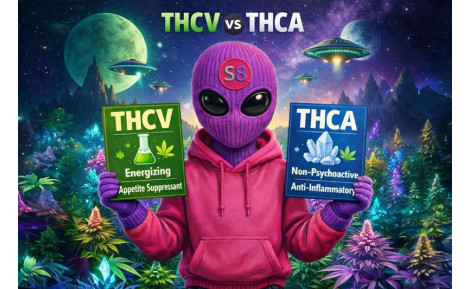
THCV, or tetrahydrocannabivarin, is a cannabinoid less well-known than its famous cousins such as THC or CBD, but it is beginning to make a name for itself thanks to its unique properties and potential health benefits, according to research. Derived from the cannabis plant, THCV shares certain chemical similarities with THC, but with a major difference in its effects and applications. Unlike THC, THCV is non-psychoactive.
Origins and production
THCV is found primarily in certain cannabis strains, particularly those originating from Africa. Its concentration in the plant can vary considerably, which directly influences the effects experienced by the user. The production of THCV in the plant results from a specific synthesis process that slightly alters the molecular structure of THC, giving rise to a compound with distinct properties.
Chemical profile and effects
Chemically, THCV is similar to THC, but it differs in its action on the body’s cannabinoid receptors. At low doses, THCV acts as a CB1 receptor antagonist, which can lead to effects different from those of THC, notably a reduction in appetite rather than stimulation. This characteristic makes THCV a subject of interest for research, particularly for people seeking to control their weight or appetite.
Wellbeing potential
Research into THCV is still in its early stages, but preliminary studies suggest it could offer significant wellbeing benefits. These include regulating blood sugar levels and reducing the symptoms of certain conditions such as Parkinson’s disease or epilepsy. Its potential to positively influence mood disorders and anxiety is also being investigated, which could pave the way for new applications in the treatment of psychological disorders.
In summary, THCV stands out for its unique profile, which could position it as a key player in the future of cannabinoid-based treatments. As research continues to unravel its mysteries, THCV promises to bring a new dimension to our understanding of cannabis compounds and their potential applications for health and well-being.
Understanding CBD
Exploring CBD
CBD, or cannabidiol, is one of the most studied and appreciated cannabinoids derived from the cannabis plant. Unlike its cousin THC, CBD does not produce psychoactive effects, making it an attractive option for those seeking the therapeutic benefits of cannabis without the altered state of consciousness associated with THC.
Origins and extraction
CBD is present in various strains of cannabis, including hemp, from which it is often extracted due to its low THC content. This versatility makes CBD easy to isolate and use in a wide range of products, from oils and creams to dietary supplements and beauty products.
Chemical profile and interaction with the body
CBD interacts with the body’s endocannabinoid system, but in a different way to THC. It primarily influences CB2 receptors, which are present throughout the body, and may also act on other biological targets, contributing to its anti-inflammatory, analgesic and anxiolytic effects. This complex interaction is at the heart of current research, which aims to understand how CBD can be used to treat or alleviate a variety of conditions.
Therapeutic potential
The therapeutic potential of CBD is vast and covers a wide range of medical conditions. It has been studied for its role in reducing anxiety, relieving chronic pain, treating certain forms of epilepsy, and even as a potential aid in the treatment of sleep disorders and certain neurodegenerative diseases. Its ability to reduce inflammation also makes it of interest for the treatment of conditions such as arthritis and certain autoimmune diseases.
CBD in practice
The growing accessibility and legality of CBD have led to an explosion of products available on the market, offering consumers a variety of options for incorporating CBD into their self-care routine. However, it is important to note that not all CBD products are created equal, and quality can vary considerably. Consumers are encouraged to seek out high-quality, lab-tested products to ensure safety and efficacy.
In conclusion, CBD stands out as a multifaceted cannabinoid, offering significant therapeutic potential without the psychoactive effects associated with other components of cannabis. As research continues to evolve, CBD remains a subject of major interest for medical science and consumers seeking natural alternatives for wellbeing and health.
Comparison of the effects of THCV and CBD
Psychoactive effects: THCV vs CBD
THCV: Although chemically similar to THC, THCV in low doses acts as a CB1 receptor antagonist, which can reduce certain psychoactive effects of THC. At higher doses, however, it can produce mild psychoactive effects, though these are generally less intense and of shorter duration than those of THC.
CBD: CBD is known for having no psychoactive effects, meaning it does not produce the ‘high’ associated with THC. On the contrary, it can even mitigate the psychoactive effects of THC when consumed together, contributing to a more stable balance.
Effects on appetite
THCV: Unlike THC, which is known to stimulate appetite, THCV can act as an appetite suppressant. This unique property makes THCV a subject of interest for research into weight management and eating disorders.
CBD: CBD has no significant direct effect on appetite. Some studies suggest it may help regulate appetite by reducing anxiety or stress, but these effects are indirect.
Pain and inflammation management
THCV: Research into THCV for pain management is still limited, but it shows potential, particularly for pain associated with inflammation, thanks to its anti-inflammatory properties.
CBD: CBD is widely recognised for its analgesic and anti-inflammatory effects. It is used to treat a variety of painful conditions, ranging from arthritis to neuropathic pain, offering a natural alternative to traditional medicines.
Role in mood regulation
THCV: THCV is being studied for its potential in treating psychological disorders such as anxiety and depression, although the data is still preliminary.
CBD: CBD has demonstrated significant beneficial effects on anxiety and depression in various studies. Its ability to act on serotonin receptors may explain its positive effect on mood and psychological disorders.
Potential against diabetes
THCV: THCV shows promising potential in the treatment of type 2 diabetes, thanks to its ability to regulate blood sugar levels. Preclinical studies suggest that it may improve insulin sensitivity.
CBD: Although CBD is not directly linked to blood sugar regulation, its anti-inflammatory and antioxidant effects may offer benefits in the context of metabolic diseases by reducing associated complications.
THCV and CBD each offer a unique range of effects and therapeutic potential. Whilst THCV may stand out for its appetite-regulating properties and potential in the treatment of diabetes, CBD excels in its ability to relieve pain and inflammation and improve mood without the psychoactive effects of THC. Together, these cannabinoids illustrate the diversity and complexity of cannabis as a medicinal plant, highlighting the importance of ongoing research to unlock their full therapeutic potential.
Therapeutic applications and use
Medical use of THCV
THCV is only just beginning to be recognised for its potential therapeutic applications, thanks to research highlighting its unique effects. Although studies are still at an early stage, THCV shows promising potential in several areas:
Weight and appetite control : THCV may play a role in the management of obesity and eating disorders due to its appetite-suppressing effects.
Blood sugar regulation: Preliminary research suggests that THCV may help regulate blood sugar levels, offering new hope for people with type 2 diabetes.
Neuroprotection: The potential of THCV to protect against neurodegenerative diseases, such as Parkinson’s and Alzheimer’s, is also being investigated, thanks to its antioxidant and neuroprotective properties.
Use of CBD: proven benefits and areas of application
CBD, meanwhile, is already widely recognised and used for its many therapeutic benefits:
Anxiety and depression: CBD is renowned for its anxiolytic and antidepressant effects, helping many people manage their stress and mood without the side effects of conventional medication.
Pain and inflammation: Its use in the treatment of chronic pain, arthritis and inflammation offers a natural alternative to traditional painkillers.
Sleep disorders: CBD also helps improve sleep quality by addressing the underlying causes of insomnia, such as anxiety or pain.
Epilepsy: One of the most notable medical uses of CBD is its effectiveness in treating certain forms of epilepsy, which has even led to the approval of CBD-based medicines by health authorities in several countries.
Comparison of the areas of application of THCV and CBD
Although THCV and CBD share certain areas of application, such as their potential in the treatment of neurodegenerative disorders and their ability to positively influence mood, they differ in their mechanisms of action and specific effects. THCV stands out for its potential in regulating appetite and metabolism, whilst CBD is better known for its anti-inflammatory, analgesic and anxiolytic properties.
All the benefits mentioned are those within the scientific field of application. CBD and THCV products sold in online shops are intended solely for well-being purposes.
THCV and CBD offer vast potential for the treatment and management of various medical conditions. As research continues to advance, these cannabinoids are proving to be valuable tools in the therapeutic arsenal, each with its own specific areas of application and unique benefits.
See also
THCV: a cannabinoid with multiple benefits