

Your cart is empty

CBD vs THC: A brief glossary of cannabis
Cannabis, Hemp, Marijuana, Cannabinoids, THC, CBD, …
So many different words, and ultimately, do we really know what they refer to and what they actually are?
Here you will find a short glossary that will certainly help you to (re)familiarise yourself with these various hemp derivatives as well as their different properties and specific uses.
Marijuana/Cannabis/Hemp
From a botanical point of view, it is the same plant!
Culturally speaking, the terms ‘Marijuana’ and ‘Cannabis’ are often associated with recreational use.
The term ‘Hemp’, on the other hand, is mainly used for therapeutic and industrial purposes.
The term cannabis has been widely used in recent years to refer to ‘recreational’ hemp which contains THC. Cannabis with a THC content of more than 0.2% (in France and Europe) is illegal. In Switzerland, the regulations are slightly more relaxed and allow a THC content of 1%.
More recently, we have also begun to hear about “cannabis light”, which refers to CBD-rich hemp. CBD products are legal in Europe and Switzerland.
Here you will discover other uses for this plant and, above all, its benefits. For example, so-called therapeutic/medicinal uses, for construction, the manufacture of fabrics, sound and thermal insulation, and fuels are made from hemp. Hemp extracts are also found in certain dietary supplements as well as in cosmetics.
Indica/Sativa
"Cannabis Sativa L." is the scientific name used to refer to the cannabis variety in general. This large family includes industrial hemp, CBD and recreational cannabis, which contains THC.
This plant family is divided into two sub-families: "Cannabis Sativa L. Indica" and "Cannabis Sativa L. Sativa".
"Cannabis Sativa L. Indica" refers to cannabis for recreational use which contains THC. This is prohibited for sale and consumption in Europe.
"Cannabis Sativa L. Sativa" refers to the subfamily of industrial hemp which naturally has low THC levels and may have a high CBD content. This therefore includes industrial hemp, which generally has a very low THC and CBD content and is widely used in textile manufacturing, as well as cannabis light or CBD, which has a very low THC content, but a high CBD content for making CBD products such as those in our online shop.
Terpenes
Aromatic molecules found in all plants, they form the basis of smells and tastes (and sometimes even colours, depending on certain plants).
They remain largely misunderstood and subject to prejudice on the part of the general public and the authorities. However, the latest studies on terpenes show that they may have some beneficial properties or an entourage effect with certain cannabinoids.
Cannabinoids
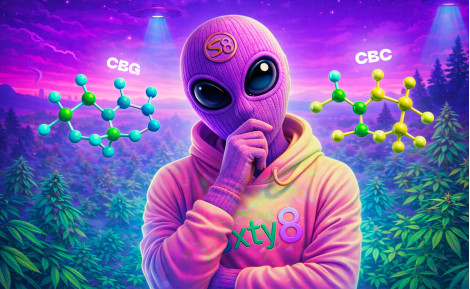
THC–CBD–CBN–CBC–CBG…
These are substances naturally produced by hemp, each with its own specific properties. The human body produces its own endocannabinoids, which have physiological effects similar to those of hemp. Consequently, consuming additional cannabinoids can complement our natural production.
THC [Tetrahydrocannabinol]
THC produces a feeling of ‘liberation’, the ‘high’ effect, and in high doses it can even cause paranoia. THC is the main substance sought in cannabis when it is intended for recreational use.
THC is a complex molecule and was only isolated relatively late, in 1963.
CBD [Cannabidiol]
The second best-known cannabinoid in hemp is CBD, often referred to as ‘legal cannabis’ as it does not produce psychotropic effects or a feeling of intoxication.
On the contrary, its use is often associated with relaxation, and CBD-based medicines have also been developed to treat neurological disorders.
It is said that CBD acts on the body rather than the mind, unlike THC. It acts on key functions of the human body such as mood, sleep, appetite and relaxation; it possesses anti-inflammatory properties, antidepressant properties and is effective against chronic pain.
Numerous studies are investigating this molecule and its properties. In 2017, the World Health Organisation (WHO) published a report on CBD and removed it from the list of narcotic substances. Since studies have been published one after another to assess how this molecule should be used.
Consumption:
Flowers to smoke or brew, oils, e-liquids or food products, capsules, creams, crystals, … A wide range of products has developed around CBD, you can discover our full range of products in the shop.
Generally consumed by smoking, it can also be vaped or added to food. It is estimated that 70% of the molecules are destroyed during combustion.
I recommend you visit our Shop page, where you will find all our best advice on consuming CBD in all its forms.
To find out even more about the terminology surrounding CBD, we recommend these related articles: