

Your cart is empty

Hemp, CBD, Cannabis… What are they?
For several years now, we have been witnessing a rise in the popularity of cannabis in Europe and France.
However, the term is often misused, and we hear all sorts of contradictory claims. Some believe that cannabis refers solely to medical cannabis, such as therapeutic cannabis or CBD, whilst others believe it also includes industrial hemp.
To clear up the confusion, let’s (re)take stock of what hemp is, its various benefits and uses.
What are the differences between cannabis and hemp?
Marijuana, cannabis, hemp... So many terms that ultimately mean the same thing in botanical terms.
If we look more closely at the cultural aspect, we realise that “marijuana” and “cannabis” are terms associated with recreational use. On the other hand, the term “hemp” is mainly used in therapeutic and industrial contexts (in the construction, cosmetics, textile and food sectors).
Varieties of hemp
The scientific name for hemp used to refer to the cannabis variety in general is “Cannabis Sativa L.”, and all types of hemp (recreational cannabis containing THC, CBD, industrial hemp) are found within this large family of plants. The latter is divided into two main categories:
• Cannabis Sativa L. Indica: cannabis for recreational use which contains THC and which is prohibited for sale and consumption in Europe;
• Cannabis Sativa L. Sativa: industrial hemp with a low THC content and a variable CBD content (as a reminder: only hemp with a THC content of 0.2% or less is authorised and legal in France and Europe).
>>See our CBD products in our shop<<
The effects of hemp
We often hear about the psychotropic or psychoactive effects when discussing hemp. According to the French psychiatrist, neurologist and writer Jean Delay, a psychotropic substance, which may be of natural or artificial origin, may “be capable of altering mental activity, without prejudging the nature of this alteration”.
Hemp is considered a natural psychotropic substance; it is the level of THC present that will determine how dangerous and toxic its effects are. THC determines the narcotic properties of a hemp-based product. Recreational cannabis is therefore considered a psychoactive substance. CBD, on the other hand, which contains a low level of tetrahydrocannabinol and is used primarily for its soothing, anti-inflammatory and relaxing properties, is considered non-psychoactive.
What are the different cannabinoids that exist?
In the 1950s, Israeli researchers discovered and isolated various cannabinoids found in hemp.
Each has its own effects and properties...
The main cannabinoids
Cannabidiol (CBD) and tetrahydrocannabinol (THC) are the main cannabinoids in existence, but there are many others (110 to date).
If you’d like to find out more about these two molecules, click here to read our previous glossary article where we explain their specific characteristics.
Furthermore, within these two cannabinoids themselves, there are various molecules, including:
• CBDa, which is an acidic form of CBD known as cannabidiolic acid (also called a CBD precursor cannabinoid), is found when the cannabis plant is in full growth;
• THCa, also known as tetrahydrocannabinolic acid, acts as a biosynthetic precursor to THC; it is converted into THC through the action of light and heat.
Good to know: numerous studies have been conducted on the CBD molecule and its properties, and it has been removed from the list of narcotic substances following a WHO report published in 2017.
Minor cannabinoids
Now, let’s take a look at some of the cannabinoids that have been isolated and synthesised:
• CBN, or cannabinol, is considered a by-product of THC degradation. As the plant ages or when THC is exposed to oxygen or heat, it turns into CBN (it is far less psychoactive than THC but remains a powerful sedative);
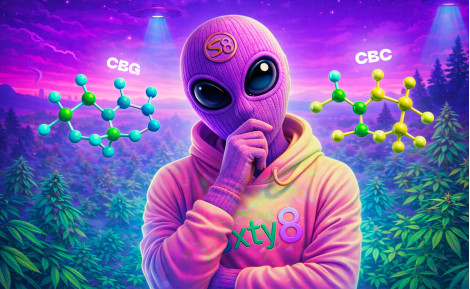
• CBG, or cannabigerol, which is non-psychoactive, is a precursor to CBD and THC; it also helps to enhance the effects of other cannabinoids and is particularly effective for physiological symptoms such as cancer, glaucoma or or MRSA;
CBC, or cannabichromene, is derived from CBCa (as with CBDa and THCa); when the acid is broken down by exposure to light or heat, it is particularly potent against osteoarthritis and helps to modulate our perception of pain;
We also hear about CBDL, or cannabinodiol, CBE, or cannabielsoin, CBT, or cannabitriol, CBL, or cannabicyclol, etc., but research is still in its infancy and there remains much to discover about hemp, its molecules and its benefits.
How is hemp grown?
A complex world that is still relatively unknown to the general public, the method of cannabis cultivation is an argument often put forward when selling hemp-based products. What are the different cultivation methods and what do they involve? We tell you everything.
Outdoor cultivation
Outdoor cultivation, or growing outdoors, is the most natural way to grow hemp. It is also the riskiest method, as it is impossible to control outdoor conditions.
Sativa prefers warm and humid environments, whilst Indica thrives in slightly colder and harsher conditions. It is therefore a growing method that many growers are not prepared to adopt, given the risks involved.
Indoor cultivation
Indoor cultivation, or indoor growing, is the most popular method among light cannabis growers as it allows for total control over production. However, the process is more expensive and requires a mastery of growing techniques, as in an artificial environment, every detail counts. Nevertheless, another major advantage is the ability to control the THC content with greater precision, as wild pollination is not a factor.
The greenhouse
The greenhouse, or greenhouse cultivation, allows one to benefit from the two previous cultivation methods: indoor and outdoor. The plants enjoy the benefits of the sun whilst being protected from external stresses. The hemp is thus richer, even though it does not match the quality of plants grown outdoors. Finally, the key argument is the ecological footprint of this cultivation method, which is significantly lower than that of indoor cultivation.
To conclude, whether by inhalation (by smoking a hemp flower or by vaping hemp e-liquid), by oral ingestion (by cooking with Marrakech butter, CBD oil or hemp seeds), sublingually (by placing a few drops of hemp oil under the tongue) or via topical application with hemp-based creams and cosmetics, it is essential to choose a high-quality CBD product, such as those we make using the hemp we grow and harvest ourselves in our fields.